

BHP is not building Western Ridge to announce a new iron ore era. It is building it to protect one.
By the time the first of more than 30 preassembled modules began moving from Port Hedland toward Newman in early 2025, the project had already crossed its official threshold. BHP had approved US$943 million in capital expenditure. The Sedgman CPB Joint Venture had been appointed. Long-lead procurement had moved into construction. But the convoy gave the project its most visible moment: modules up to 125 tonnes, 42 metres long and 11 metres wide, travelling more than 450 kilometres through active rail crossings, loading zones and a working mine site.
CPB Contractors Project Manager Christian D’Angelo described what the operation demanded. “During this exercise, we were focused on safety and minimising impacts to communities to ensure the smooth transition of these modules from laydown yard to site,” he said. The convoy moved on, and the real work resumed.
That is the story mining executives will recognise and the one this magazine is more interested in. Official milestones make projects legible. Contract awards make them measurable. But sustaining infrastructure becomes consequential only when it starts behaving like part of the system it was built to protect. The ore has to move. The hub has to keep feeding. The next phase has to begin while the current phase is still finding its rhythm. At Western Ridge, all of that is now in motion at once. The question is no longer whether the project will exist. It is whether a system already performing at world scale can renew itself without losing the rhythm that made it worth protecting.
WHAT THE SYSTEM DEMANDS
To understand why Western Ridge matters, you have to leave the crusher behind and look at the system it feeds.
BHP’s Western Australia Iron Ore business is one of the world’s great mining machines, and its value does not sit in any single pit, plant, rail line or port. It sits in the way those parts behave together — ore mined, crushed, blended, railed and shipped through a chain refined over more than five decades of Pilbara operations. Newman Operations, part of an 85:15 joint venture between BHP and partners Mitsui and ITOCHU since 1968, accounts for roughly 78 million tonnes of annual iron ore production. WAIO as a whole recorded a third consecutive production record of 257 million tonnes in FY2025, underpinned by supply chain excellence, improved rail cycle times and enhanced port loader performance.
This is not a system looking for growth. It is a system looking for continuity.
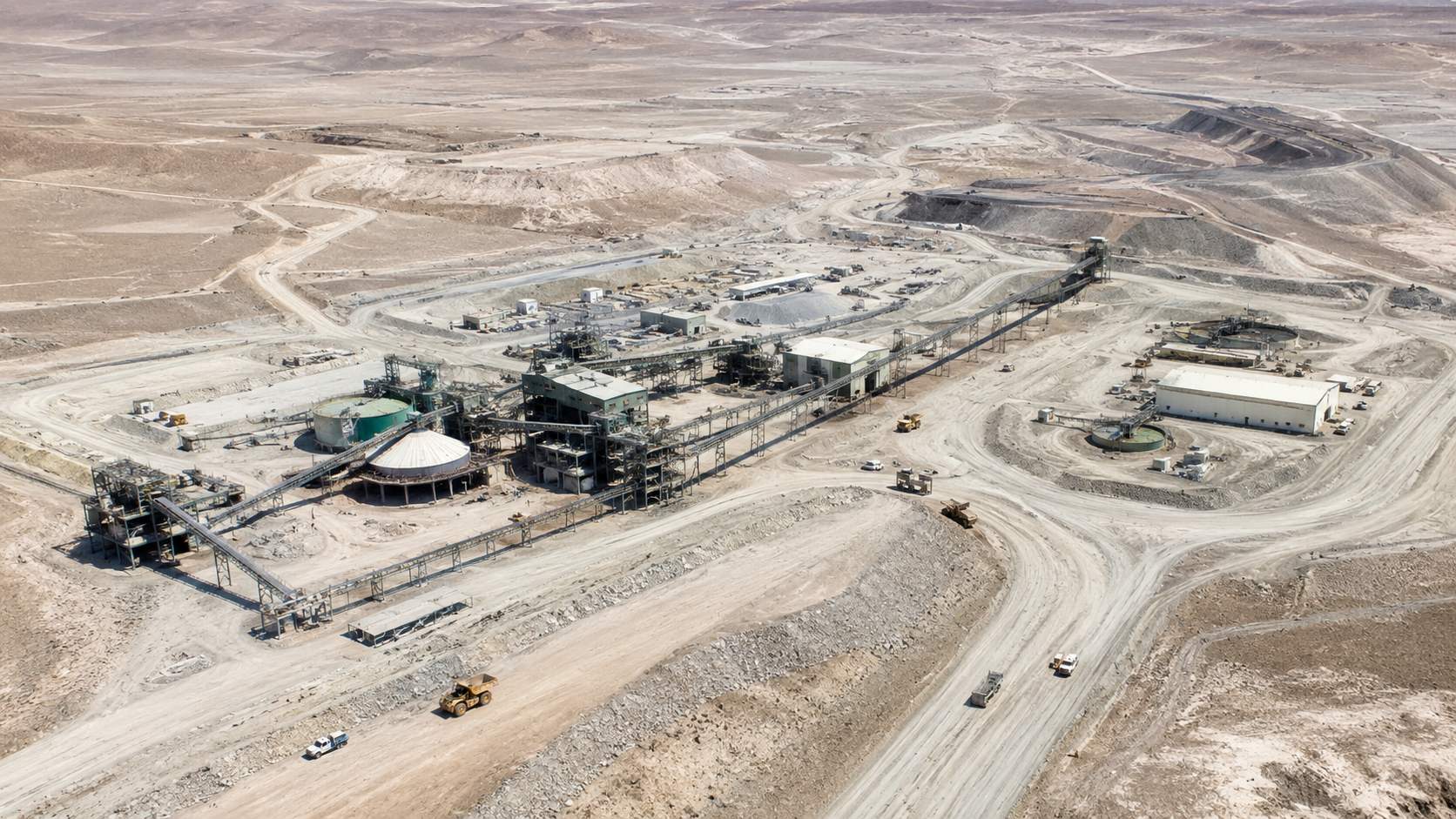
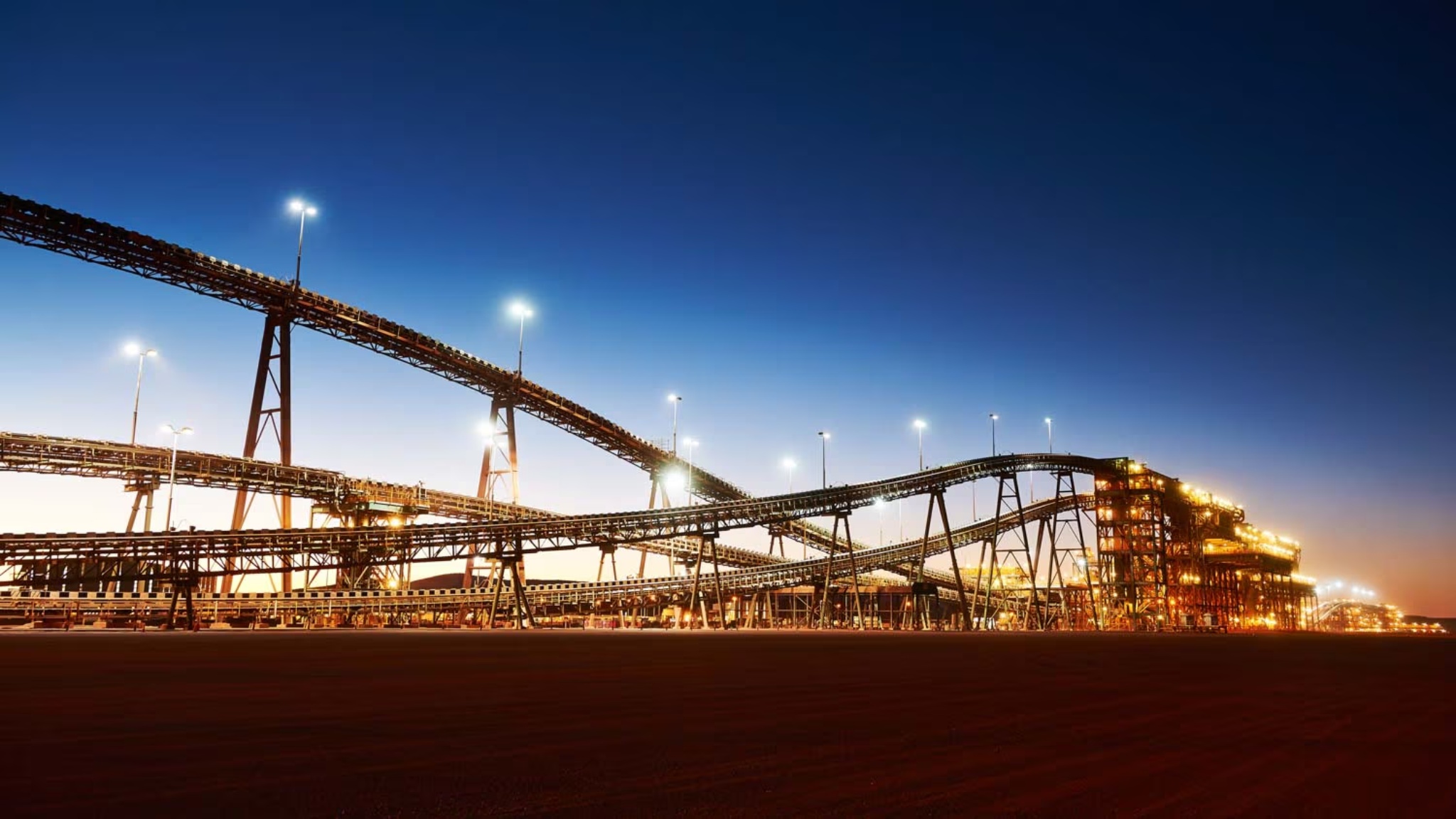
Western Ridge is designed to deliver an average of 25 million tonnes per annum for around 12 years, replacing production from depleting orebodies around Newman. Its core infrastructure — a new 30 Mtpa primary crusher and a 12-kilometre overland conveyor moving ore from the Mount Helen and Silver Knight deposits to the Newman West processing hub, with first production targeted for Q1 FY2027 — is not designed to create an entirely new operating centre. It is designed to keep the existing one productive as the orebodies around it change.
A mine built for growth is judged by how much it adds. A sustaining project is judged by what it prevents: lost tonnes, underfed plants, stranded infrastructure, declining hub efficiency. Across the Pilbara, the same capital logic is playing out at scale. Rio Tinto committed US$1.8 billion to its Brockman Syncline 1 project in March 2025, incorporating a new primary crusher and overland conveyor targeting first ore in 2027. The Pilbara’s iron ore majors are not expanding simultaneously so much as renewing simultaneously
THE CONVEYOR IS DESTINY
Everything at Western Ridge, in the end, comes back to what can move and when.
The 12-kilometre overland conveyor is not merely a transport line. It is the physical expression of BHP’s hub logic. Ore from Mount Helen and Silver Knight does not need to become an isolated processing story. It can be crushed and carried into Newman West, where existing infrastructure continues doing what it was built to do. WAIO’s approach has always been to plan development around integrated hubs — Newman, Yandi, Mining Area C and Jimblebar — connected to satellite orebodies by conveyors or spur lines, running multiple orebodies through the same processing plant and rail network. Western Ridge is the next expression of that doctrine: build at the margin of what already exists, connect intelligently, and preserve the rhythm of the system.
The Sedgman CPB Joint Venture holds the A$757 million construction scope covering the conveyor, radial stacker and associated stockpiling systems. The 30 Mtpa primary crusher was separately procured by BHP — an important distinction that makes Western Ridge a coordinated interface between owner equipment and contractor-delivered systems rather than a single turnkey package. Under an early contractor involvement model, SCJV worked with BHP across engineering, design and long-lead procurement for approximately twelve months before formal contract award in May 2024. That front-loaded collaboration meant construction commenced within weeks of appointment — which is why modules weighing 125 tonnes were crossing the Pilbara within ten months.
A conveyor of this scale looks straightforward only from a distance. Every transfer point carries risk. Every belt splice is a future maintenance decision made now. Every chute has to manage impact, abrasion, dust and flow across iron ore tonnages that leave no margin for imprecise design. Sedgman Onyx, the specialist engineering arm, applied discrete element modelling to the transfer chute design — computational simulation of bulk iron ore behaviour inside chute geometries before a tonne of material passes through them. In a 30 Mtpa operation, a poorly designed chute does not produce a visible failure immediately. It produces wear patterns, blockages and unplanned shutdowns across months and years of operation.
DEM simulation is the discipline that prevents those consequences from being built into the system during construction.
The project also steps into an increasingly autonomous operating environment. Newman East has transitioned 22 CAT 793 haul trucks to fully autonomous operation, coordinated through BHP’s Integrated Remote Operations Centre in Perth. Western Ridge’s crushing and conveying infrastructure will feed into that same hub — adding production capacity to a system simultaneously becoming more remotely managed and more dependent on physical infrastructure performing at specification.
The conveyor is destiny. Everything else at Western Ridge follows from whether that 12 kilometres of connection performs as designed, shift after shift, for the next 12 years.
ONE PROJECT BUILDING. ONE SYSTEM OPERATING.
There is a discipline to building inside a live mining environment that looks obvious in a schedule and is genuinely difficult in the field.
Western Ridge is not being assembled in isolation. It must interface with active mining areas, operating rail crossings, safety exclusion zones, workshops, construction corridors and community routes simultaneously. The module convoy made that visible in the most direct way possible. Moving 30-plus structures of 125 tonnes and 42 metres through an active mine site required, as D’Angelo described it, meticulous planning and structural checks at every stage. Further convoys followed. The complexity did not diminish with repetition — it was managed by a team that had planned for it from the start.
That is why the contractor structure matters as much as the equipment.
CIMIC Group Executive Chairman Juan Santamaria described the joint venture’s logic at contract award. Sedgman Managing Director Grant Fraser pointed to the relationship continuity that reduces interface friction on a complex project: “We are pleased to continue our longstanding relationship with BHP and extensive work with CPB Contractors to deliver value for the Western Ridge Crusher Project.” CPB Contractors Managing Director Jason Spears brought the focus back to the ground: “CPB Contractors has a legacy delivering major projects for BHP in Western Australia and a current workforce based in the Pilbara region.”
Santamaria gives the technical rationale. Fraser gives the continuity that makes a phased project manageable. Spears gives the community dimension — which at Western Ridge is not peripheral to the execution challenge but inseparable from it.
THE CONTRACTS THAT MAKE IT REAL
Projects of this scale are sometimes discussed as though they exist in a self-contained world of capital approvals and engineering reports. They do not. They exist inside supply chains, and those are where the project’s assumptions either hold or they do not.
Start with the civil foundations that preceded everything else. Adenco, through Atlantic (Aust) Pty Ltd, holds the non-process infrastructure and enabling works scope — the go-line facilities,
earthworks and site preparation that create the conditions for every subsequent package to function. They come first. If they are not right, every phase above them pays the cost.
The high-voltage powerline package belongs to Allied Power Pty Ltd. A 30 Mtpa crushing and conveying system is as much an electrical asset as a mechanical one. In Pilbara conditions — ambient temperatures that test insulation, switchgear and terminations year-round — the reliability of that power supply determines whether the crusher and conveyor can operate continuously at design throughput, or whether they become capable structures waiting on power they cannot access.
Radlink Communications delivers the wireless infrastructure that connects the new asset to BHP’s Integrated Remote Operations Centre in Perth. In remote mining, communications are not a convenience layer added after the production systems are running. They are part of the safety case, part of the control architecture, and increasingly the interface through which a new asset is absorbed into the wider network.
Fenner Dunlop Australia, part of the Michelin Group, holds the conveyor belt splicing package for the 12-kilometre overland system. The quality of splicing done during construction sets the baseline for every tonne that will travel those 12 kilometres across the mine’s 12-year life. A splice failure in a 30 Mtpa system is not a maintenance note. It is a production event with measurable downstream consequences across the entire Newman hub.
The electrical and instrumentation scope runs across three related packages: Genus Infrastructure for HV power and fibre communications, KEC Power (Genus Industrial Services) and PARC Engineering for LV electrical and instrumentation. Together they form the control layer that converts mechanical infrastructure into an integrated, monitored, data-producing operating system — the difference between a crusher that runs and a crusher that is understood. PERI Australia provides the scaffolding across the heavy structural, mechanical and piping phases. Allied Pumps delivers the raw water tanks. Jurovich Surveying provides engineering survey across earthworks, concrete and structural, mechanical and piping phases to ±2mm tolerances — the precision that protects the project’s 12-year operating horizon from the consequences of accumulated alignment error.
COUNTRY, CULTURE AND WHAT OWNERSHIP MEANS IN PRACTICE
Western Ridge’s procurement story is most credible where it stops sounding like a values statement and starts sounding like engineering.
The entire project area sits within the Nyiyaparli People Indigenous Land Use Agreement. BHP has engaged the Karlka Nyiyaparli Aboriginal Corporation — the representative body of the Nyiyaparli people, Traditional Owners of approximately 36,684 square kilometres in WA’s east Pilbara — through on-country site visits, heritage survey processes and the co-development of a Sacred and Cultural Heritage Management Plan that governs how the project footprint is managed through construction and into operations. At board approval in February 2024, then WAIO Asset President Tim Day committed to more than US$45 million in contracts to local and Indigenous businesses. That commitment has a structure, a duration and a number attached to it — which is what distinguishes procurement intent from procurement architecture.
The number sits within a transformation that has reshaped WAIO’s procurement model at scale. Under Project Rise, launched in January 2022 with a goal of tripling WAIO’s direct Indigenous spend to A$300 million by FY2024, BHP surpassed that target significantly — spending almost A$465 million with 113 Indigenous vendors in FY2024 alone, including A$237 million directed to 68 Traditional Owner vendors, a 393 per cent increase from the programme’s inception. Global Indigenous spend across BHP’s operations reached a record US$853 million by end of FY2025.
Karlka FenceWright, a wholly owned subsidiary of the Karlka Nyiyaparli Aboriginal Corporation, undertook a $9.2 million contract fabricating and installing kilometres of security fencing across BHP’s residential villages in Newman — panels incorporating artwork by senior Nyiyaparli elder and artist Victor Parker. Fencing is practical infrastructure. It defines safety, access and separation. But here it also carries cultural presence: Parker’s artwork turns a boundary into a marker of Country. That is not a design choice made to satisfy a reporting requirement. It is what meaningful procurement looks like when it is connected to people rather than percentages.
Kingkira, a 100 per cent Nyiyaparli-owned business, holds a five-year road sweeping contract across WAIO’s Port Hedland, Newman and Mining Area C operations. Lorrex, a Banjima and Nyiyaparli owned business, holds a five-year stemming contract across multiple WAIO sites. These companies are not construction-phase participants who will move on when the build is complete. They are operational suppliers embedded in the ongoing running of the system that Western Ridge will soon join — working on their Country, year-round, across the operations that Western Ridge exists to sustain.
The more important question is what Western Ridge creates in the regional business ecosystem beyond what Project Rise already built. If businesses like Karlka FenceWright move from services into technically meaningful supply roles — into instrumentation, into conveyor services, into materials handling — the procurement commitment will start to look as serious as the engineering model. If they do not, the numbers will remain impressive without becoming consequential.
THE PROOFS STILL REQUIRED
Western Ridge has already proved that it can move into execution. Modules have been transported and installed. Earthworks, concrete and structural work have progressed through sequential phases. The system is being built.
The proofs that matter most are still ahead.
The crusher, conveyor, stacker, electrical systems and control interfaces must transition from construction completion into operational stability. A system can be complete before it is mature, and in a 30 Mtpa operation connected directly to the Newman hub, the difference between those two states is measured in tonnes and months. Western Ridge must then feed Newman West without creating new constraints in the hub it was built to support — not just delivering ore, but delivering it in a way that preserves the logic of the wider WAIO supply chain running without pause to Port Hedland.
And across every sub-system — belt splices, power infrastructure, transfer chutes engineered to DEM specification, foundations set to ±2mm tolerances — the specialist packages are the hidden tests of whether Western Ridge becomes reliable infrastructure or merely completed construction.
The social proof is equally consequential. BHP’s US$45 million local and Indigenous business commitment will be measured not by what is spent during construction but by what it builds in commercial sustainability in Newman and across the Pilbara. Whether Karlka FenceWright, Kingkira, Lorrex and others grow into durable, operationally embedded participants in the WAIO supply chain — or remain as examples of construction-phase inclusion — will determine whether Western Ridge’s social ambition matches its engineering achievement.
Somewhere in Newman right now, there is a business owner on Nyiyaparli Country who watched construction begin in May 2024 and is calculating what Q1 FY2027 means for a contract she has been working toward. That calculation is part of the project too. It always was.
There is a conveyor being aligned near Newman. Power is being tied in. Control systems are coming online. And somewhere across nine confirmed supply-chain partners, specialist teams are turning capital expenditure into something the system can use.
 BHP- Western Ridge Crusher Project .pdf