

Canadian junior Vortex Metals has kicked off Phase II work at its Illapel copper‑silver project in Chile’s Choapa Province, using the modest but promising results from initial drilling to justify a much larger, district‑scale exploration push. The move highlights how smaller explorers are leveraging Chile’s established copper belt and existing infrastructure to build new resource camps adjacent to operating mines.
From Rio 27 to Illapel
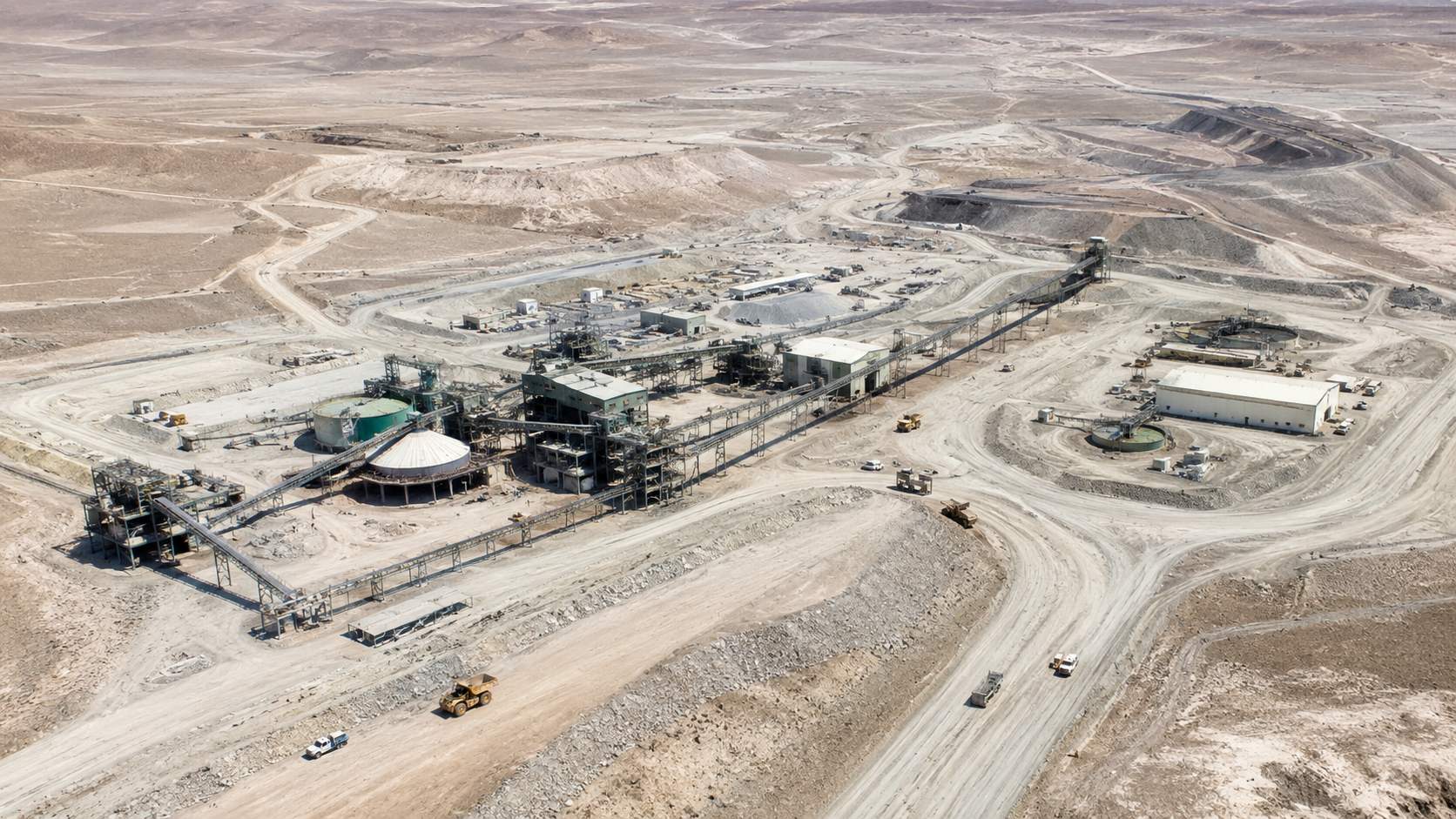
Illapel sits in the Commune of Illapel, roughly 250 km north of Santiago, and is geologically tied to Ventana Group’s nearby Rio 27 copper‑silver mine, which has been in production since 2010. Vortex holds a right‑of‑first‑refusal over Rio 27’s process plant, giving it a back‑up option if the Illapel project matures into a larger resource.
The Illapel concession totals about 180 km², with the Phase I drilling program focused on a north‑northeast‑trending manto‑style copper‑silver zone that extends from the historic Rio 27 workings. Although the first‑phase drill campaign was limited to only eight holes (around 2,025 m), it managed to confirm several key ounces of discovery potential.
What Phase I found
The three most significant holes—DVM‑02, DVM‑03 and DVM‑08—all intersected hydrothermal alteration and sulphides such as pyrite, chalcopyrite, chalcocite and bornite, pointing to a more extensive, system‑scale mineralisation rather than isolated lenses.
-
DVM‑08 returned 17.9 m averaging 0.20% Cu, with a higher‑grade core of 1.0 m at 1.56% Cu and 19 g/t Ag, interpreted as a rich core within a broader manto‑style envelope.
-
DVM‑02 hit 2.7 m at 0.30% Cu, reinforcing continuity of copper‑silver mineralisation along‑strike from Rio 27.
The drilling also revealed signs of iron‑oxide copper‑gold (IOCG)‑style mineralisation in several holes, hosted in volcanic and sedimentary rocks similar to those at the nearby El Espino deposit. A downhole EM survey in DVM‑08 picked up a broad low‑resistivity zone aligned with sulphide mineralisation, suggesting off‑hole extensions and helping generate several new targets around this hole.
Gold veins add another string
Beyond the copper‑silver system, Phase I tested a separate gold‑copper vein zone in the southwestern part of the concession.
-
Hole DVM‑06 logged 0.8 m at 1.99 g/t Au and 1.7 m at 1.18 g/t Au in quartz‑hosted veins, confirming a distinct epithermal‑style gold‑copper component that could become a separate target in later drilling.
Together, the results show that Illapel hosts at least two complementary mineralisation styles—manto‑style Cu‑Ag and IOCG‑type Cu‑Au, plus Au‑Cu veins—across an 180 km² district, giving Vortex a multi‑pronged exploration story.
Phase II: going district‑scale
Phase II now expands the exploration footprint to cover the entire Illapel concession, including multiple untested copper‑silver surface expressions and structural trends. The centerpiece is an airborne geophysical survey of about 2,000 line‑kilometres, using magnetics, very low frequency electromagnetics (VLF‑EM) and radiometrics to map structural controls and low‑resistivity sulphide responses.
Vortex is finalising plans with a local geophysical contractor and intends to use the survey results to define new IP and drill targets, before designing the next diamond‑drill programme.
Management’s view
Co‑founder and interim CEO Michael Williams said Phase I “confirmed” the company’s geological model, showing that mineralisation continues north from Rio 27 along a structural corridor and responds to EM methods.
“We see numerous copper surface expressions, multiple geophysical targets, indications of an IOCG‑style system and gold‑bearing vein systems,” Williams told investors. “We believe Illapel has significant discovery potential and are determined to pursue this opportunity.”
Broader context
Illapel forms part of a wider Latin American strategy for Vortex, which in March 2024 secured authorisation from the Santiago Astata Agrarian Community in Oaxaca, Mexico, to begin mineral exploration through its ACAGOLD unit.
For BE Infrastructure readers, Illapel underlines how a small exploratory footprint—just a handful of holes—combined with detailed geophysics can help companies frame a larger, infrastructure‑friendly copper‑silver‑gold camp in Chile’s established belt, setting the stage for more advanced drilling and potential resource delineation in 2026–2027.